Digital Maria Skłodowska-Curie educates in the "Time to Understand the Atom" campaign
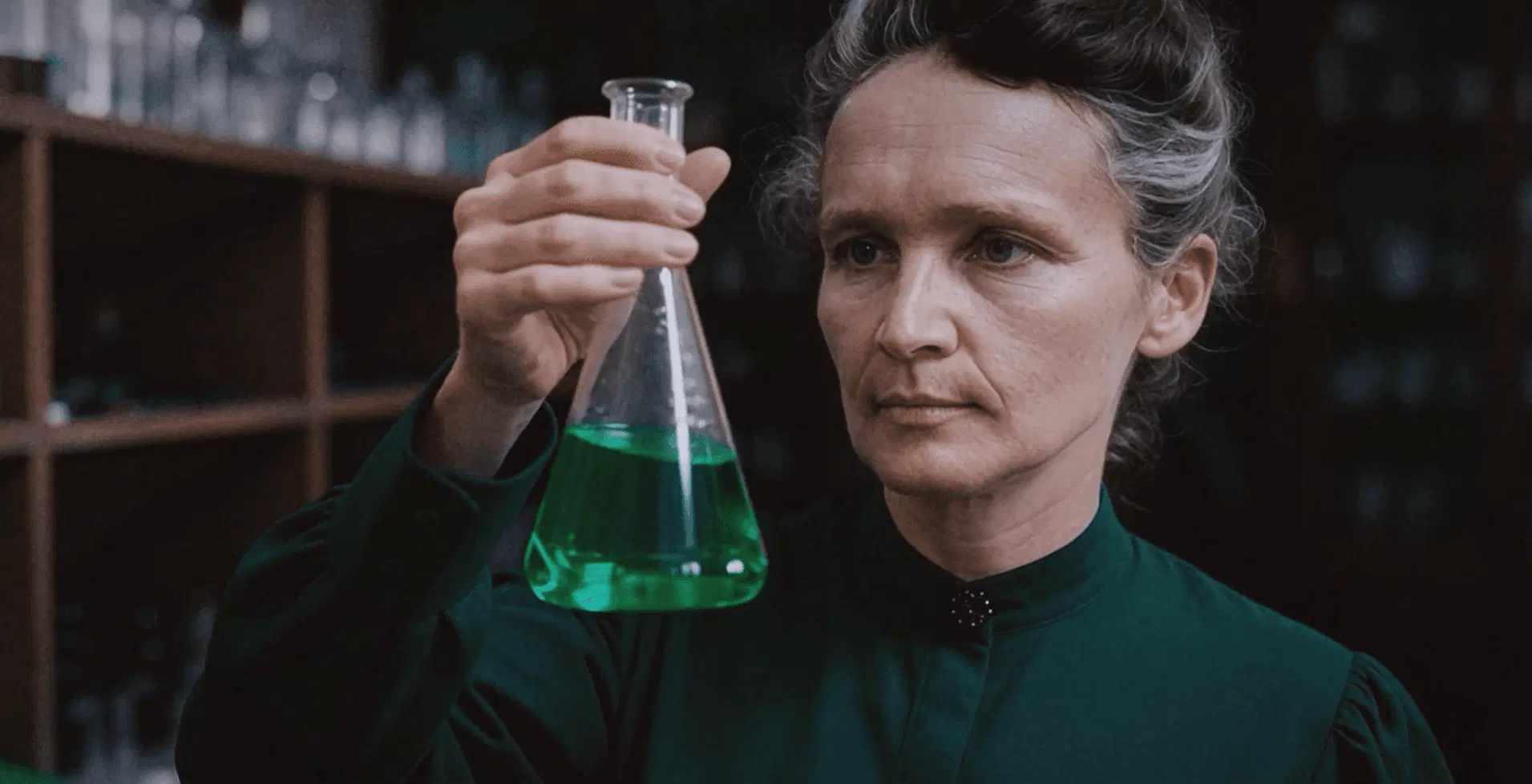
Digital Maria Skłodowska-Curie Educates in the “Time to Understand the Atom” Campaign By Agnieszka Sielańczyk December 17, 2025
Maria Skłodowska-Curie is back to teach Poles about nuclear energy. The Ministry of Energy has revived the Nobel laureate using artificial intelligence, but it was not the result of a single magical prompt. It was the outcome of several weeks of work by dozens of specialists on a project whose mission is education.
“Sometimes we fear what we do not understand, but science dispels those fears,” says the digital Maria Skłodowska-Curie in the Ministry of Energy’s educational campaign. The choice of figure was not accidental. A two-time Nobel Prize winner, a pioneer in radioactivity research, and the founder of modern nuclear physics — there is hardly a more credible ambassador for the topic of the atom.
92.5% of Poles support the development of nuclear energy but at the same time want to know more. The Ministry decided to leverage the authority of a woman who herself initiated the nuclear era. - kmag.pl
Campaign Structure
The “Time to Understand the Atom” campaign consists of nine films — six television spots featuring 3D animation and three educational materials in 2D motion design. In each of them, Skłodowska-Curie guides viewers through the mechanisms of reactor operation, safety systems, and the benefits of nuclear energy. The first series of materials was released online on November 17, and television broadcasting began on November 23.kmag.pl
Process — No Magic Button
The production was handled by Timecode Film Production and the Advalue agency. Tomasz Dławichowski, Managing Partner at Timecode, explains that this was not a matter of a single prompt. First, the team had to answer fundamental questions: from what period of the Nobel laureate’s life should the character be drawn? What should her personality and temperament be like, and how should she be perceived by contemporary viewers?
The scale of the project is striking. The production and creative team included nearly twenty people: producers, directors, AI supervisors, 2D motion designers, 3D animators, online specialists, and editors. To this was added oversight from the creative agency, teams generating shots, and a sound studio — in total, dozens of people. Three directors worked in parallel on different series of films, and a lawyer oversaw copyright issues in this new area of work
To achieve a single acceptable shot, often 200–300 attempts were needed — sometimes six or seven hours of work on one frame. Projects extended into weekends, night shifts, and weeks of intensive work. AI replaces a film set, but it does not replace the director, production organization, or post-production.
In professional advertising, AI is not a magic generate button. It is a long, precise creative process where technology is a tool but not a substitute for humans. After generating shots, the “classic” part of the process follows: the editor and director assemble the footage, the colorist gives the film its final look, AI hallucinations are removed, animations and graphics are added, and finally the audio — in this case, music sourced from libraries and voice recorded by a real narrator.
Influencers as Co-Creators
The campaign also taps into the potential of media creators. Science popularizers and lifestyle influencers were invited to collaborate: Rafał Masny, Astrofaza, Matura to Bzdura, Karol Paciorek, Prawo Marcina, Łukasz Bok, Mikołaj Błoch, Piotr Bylina, Maciej Musiał, and Wersow. Their task is to bring the conversation about the atom to the “social media backyard” — where younger generations consume information and form opinions.
Paweł Stankiewicz, Creative Director at Advalue, describes the project as a meeting between technology and the creative process:
“For the first time, we were able to transfer a creative idea directly to the screen and fully build it using AI tools. Every stage — from visual details to the way the character is presented — was subordinated to authenticity.” - kmag.pl
Reconstructing Skłodowska-Curie required both advanced solutions and precise work with source materials.
Funding and Purpose
The campaign is financed with public funds under the Polish Nuclear Energy Program. Minister of Energy Miłosz Motyka summarizes: “On the Internet, a myth can spread hundreds of times faster than the truth. That is why we respond with new, more effective tools, a new language, and new energy.”