Latest Posts
Yin and Yang: a case study in letting people switch the motion off
August 19, 2026
Case study · Motion & access
The Warsaw Glitch site is built out of movement, and people told us it was too much. Instead of a calmer second version we gave the page one switch: a Yin Yang next to the language flag that stops every animation exactly where it stands, plays the unfinished ones to their end, and puts the strip back where it stopped when the motion returns.
Read more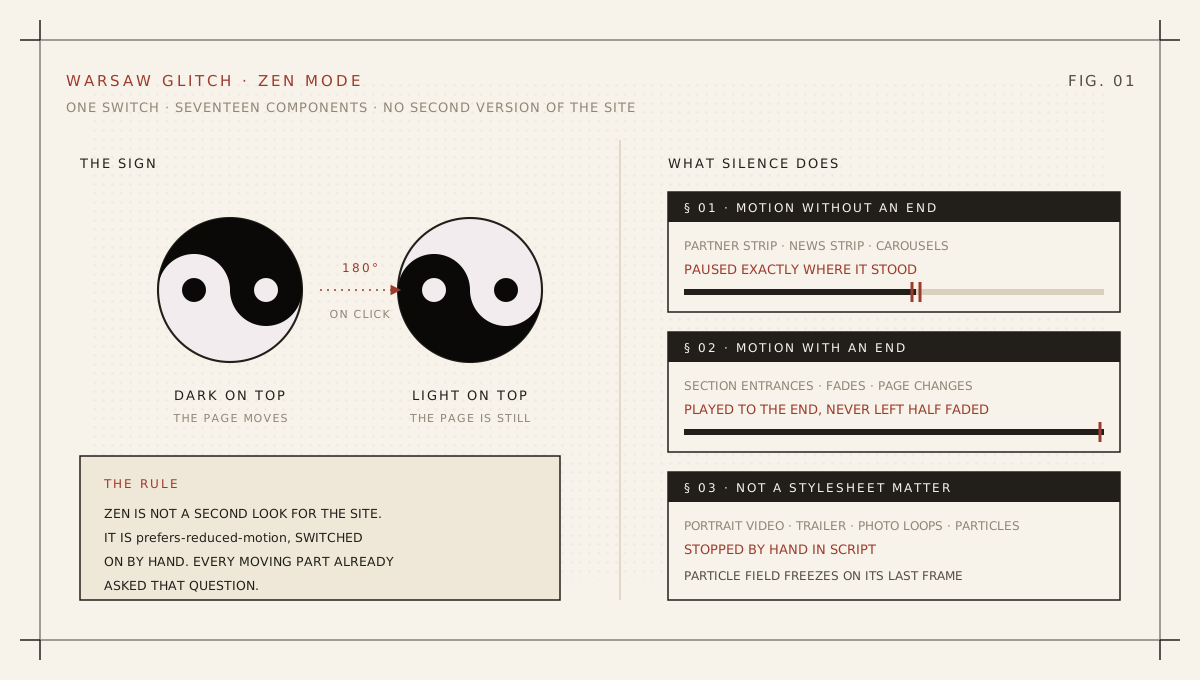
GEO: Why Search Engines Finally Learned to Recognise Real Quality
May 28, 2026
Essay · Search & GEO
For twenty years, search rewarded the people who gamed it best. The new LLM-driven engines reward the people who actually know the subject. Xfaang ran the GEO work for K MAG, and this piece sets out the four signals no SEO trick can fake. Originally in K MAG.
Read more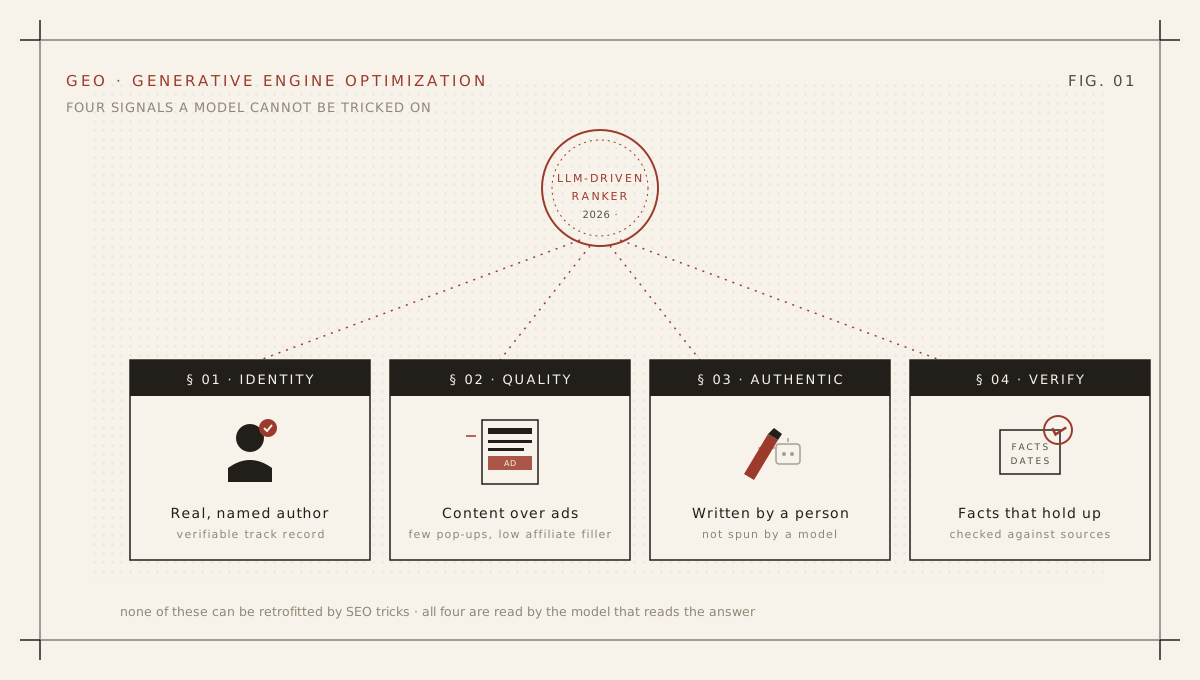
We don't just track the state of the art. We run it.
May 25, 2026
Partnership · CodeSOTA × Xfaang
CodeSOTA is the open, dated benchmark registry Xfaang pays for — and is not allowed to touch. 9,102 sourced AI benchmark results across 163 models, 371 datasets and nine capability areas. The wall between independent research and applied delivery is the most useful thing we built.
Read more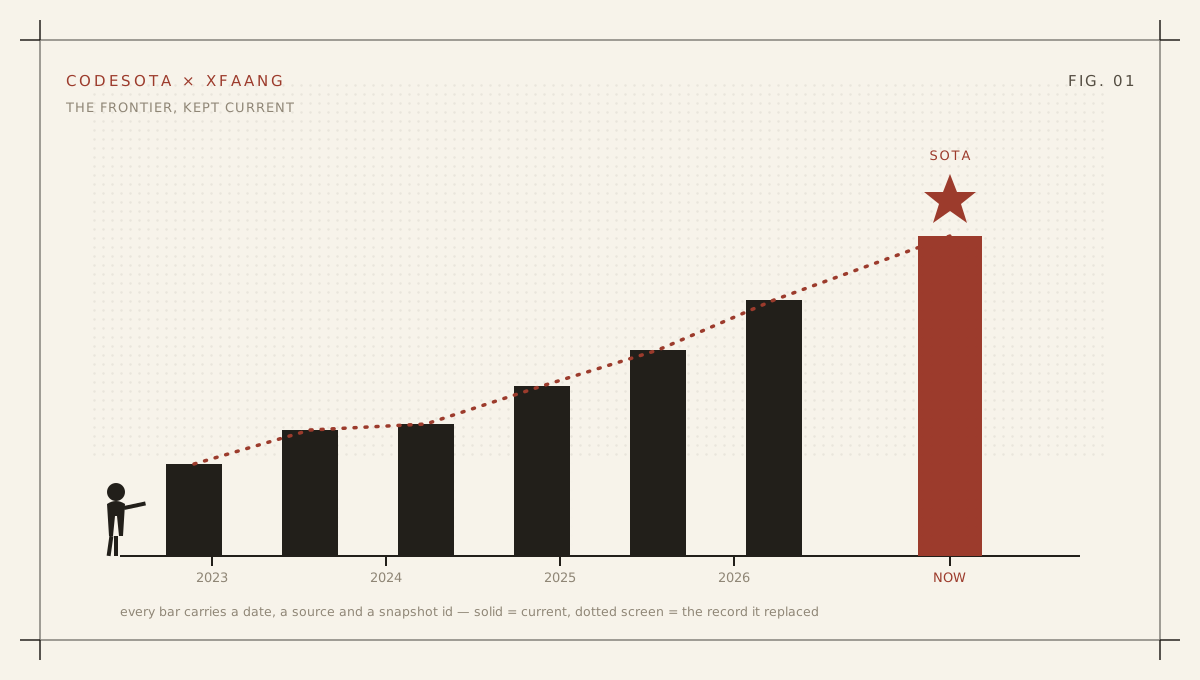
Meet Sara: Your Digital Companion with Personality
Read more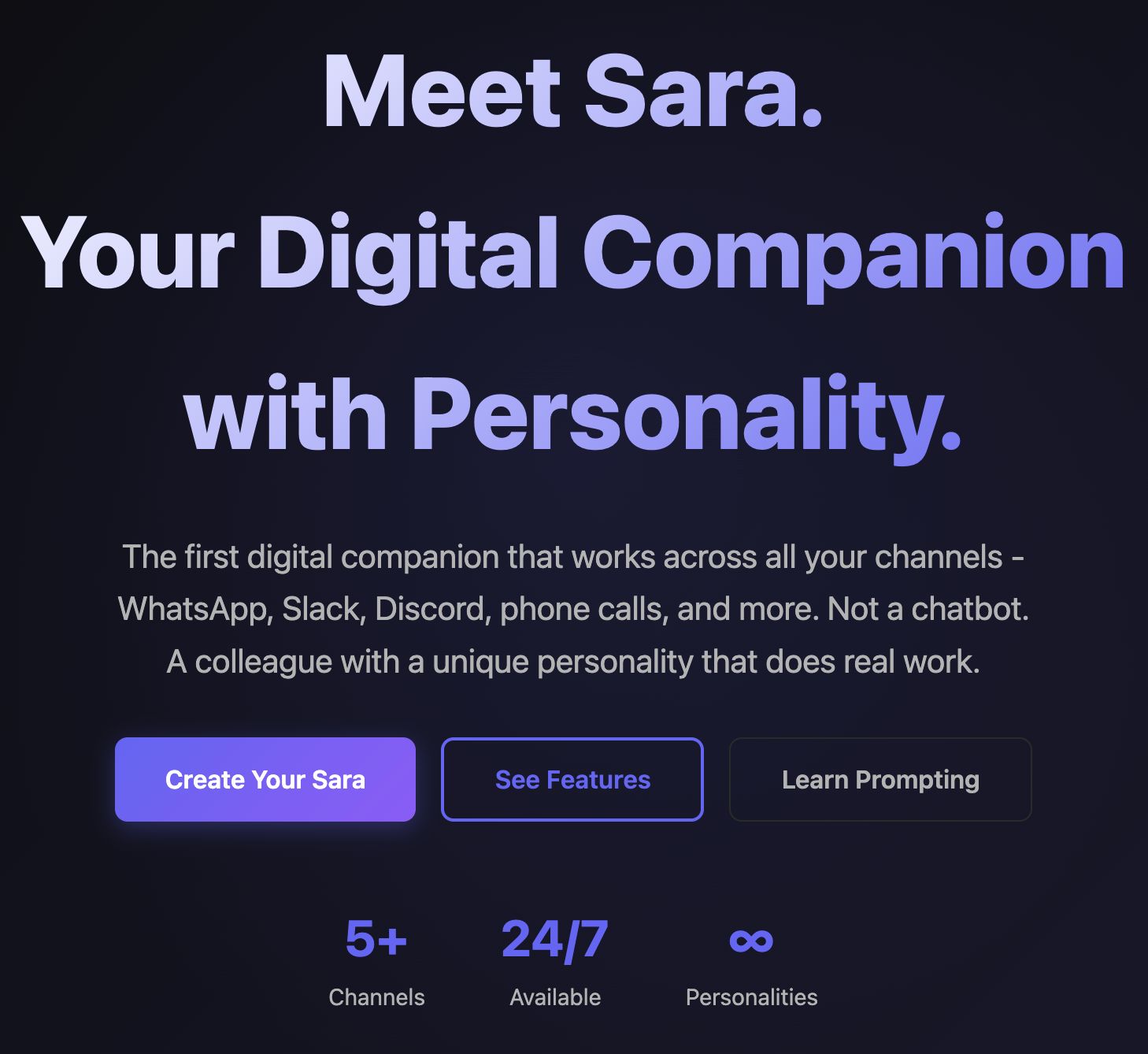
Digital Maria Skłodowska-Curie educates in the "Time to Understand the Atom" campaign
December 19, 2025
Digital Maria Skłodowska-Curie Educates in the “Time to Understand the Atom” Campaign By Agnieszka Sielańczyk December 17, 2025
Read more
The Conversation is Broken: A New Architecture for the Modern Phone Call
August 10, 2025
Remember when a ringing phone was just a ringing phone? We instinctively trusted the voice on the other end. That era is long gone. In its place is a digital minefield of spoofed numbers, relentless robocalls, and an almost total collapse of confidence in our communication channels.
Read more
We took a 120‑line shell script that sorted my messy Desktop and turned it into a notarised, privacy‑first game on the Mac App Store. Here’s the short version of how—and why—it happened. Published 6 August 2025 – by Piotr Zientara, CEO @ Xfaang
Read more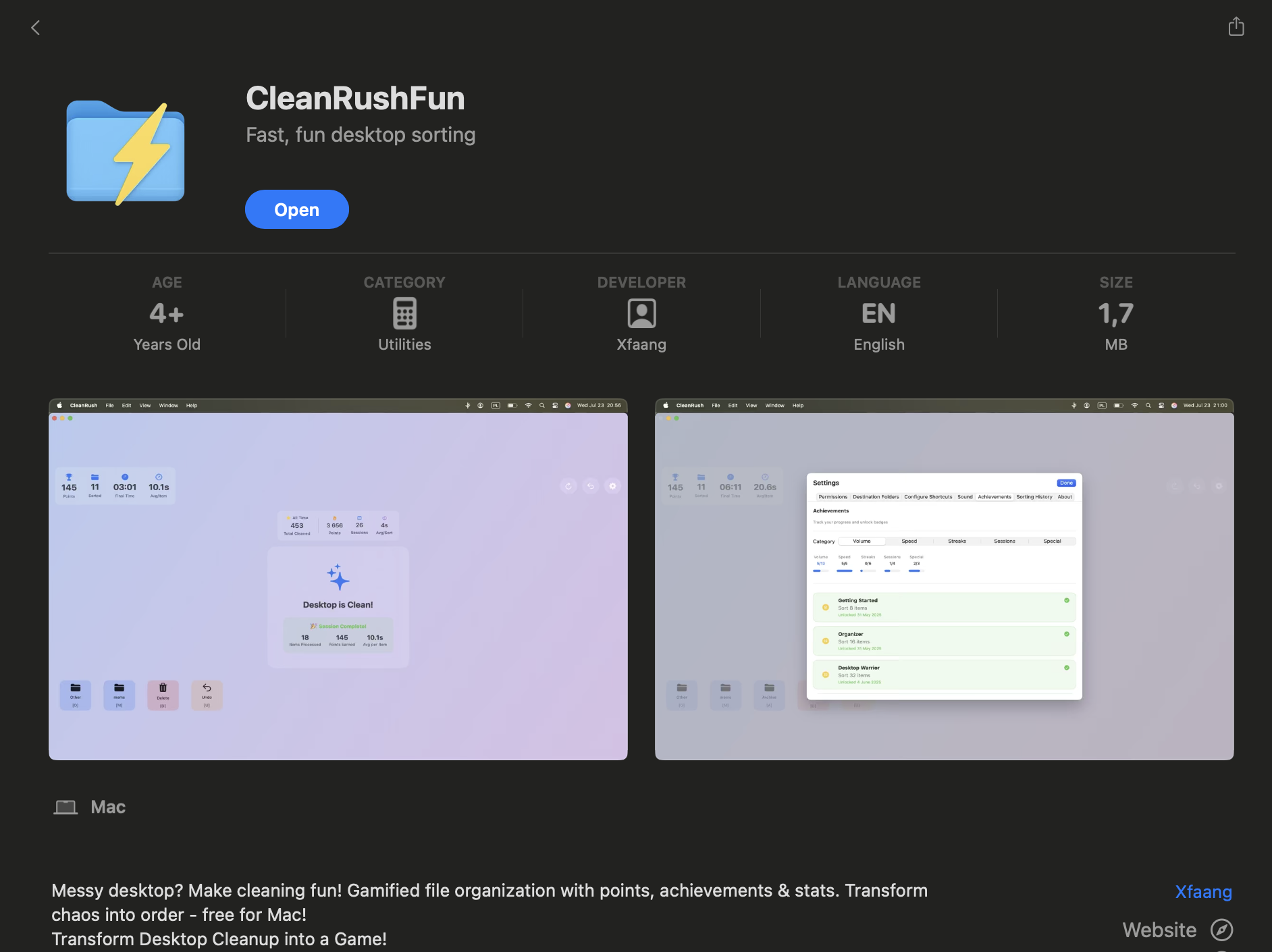
AI coding assistants like GitHub Copilot and GPT-4 have rapidly become “pair programmers” for developers, raising new questions about programmer productivity and skill. These tools can autocomplete code, suggest functions, generate tests, and even explain errors – capabilities that were almost science fiction a few years ago. For tech leads, a pressing concern is whether such strong AI tools are narrowing skill gaps (by boosting junior developers and automating grunt work) or widening them (by letting top engineers achieve even more, or by creating a divide between those who adapt and those who don’t).
Read more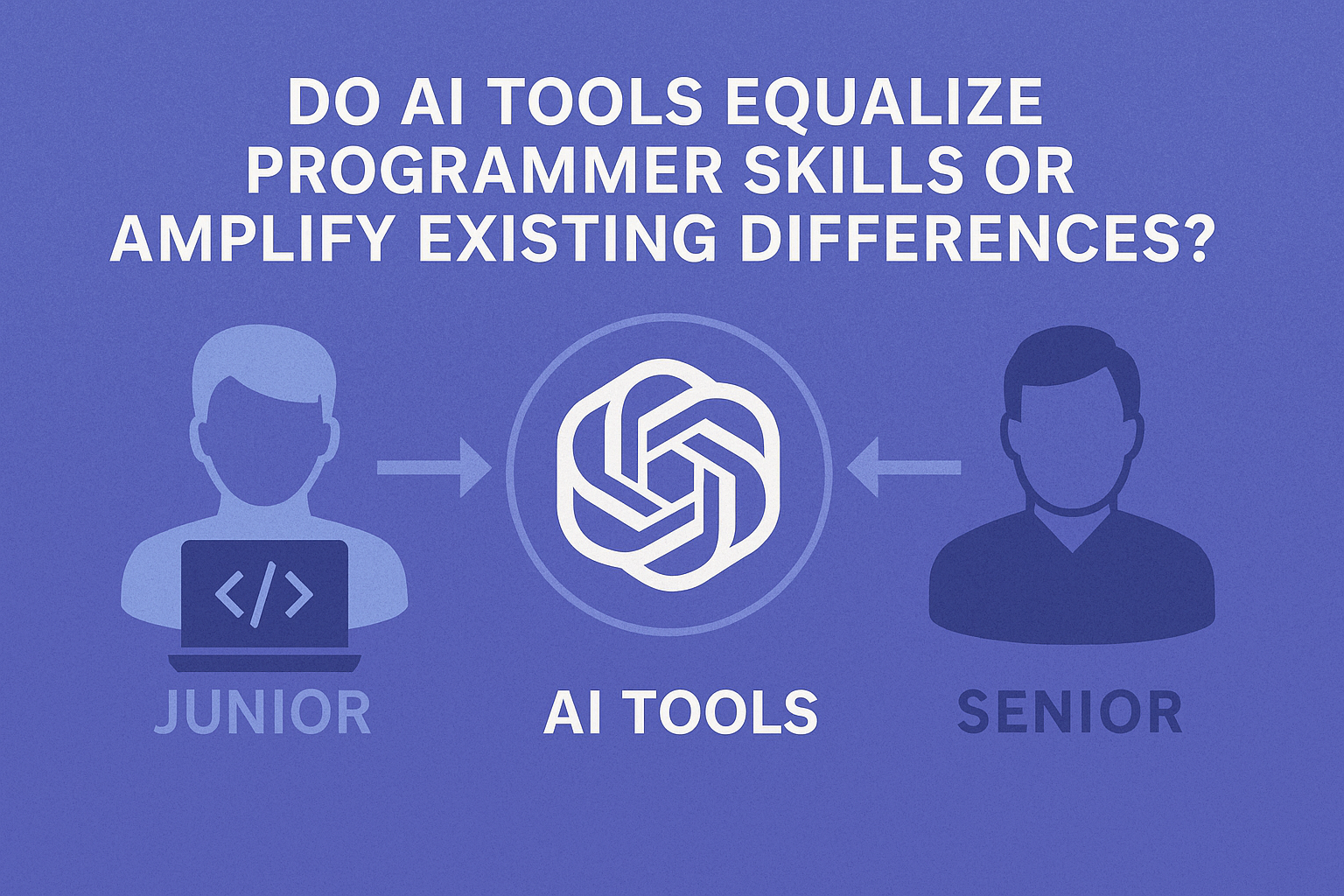
For the past decade, no-code tools promised to make software creation more accessible. They lowered the barrier to entry, empowered non-developers, and accelerated experimentation. The goal was noble — to give more people the ability to build software.
Read more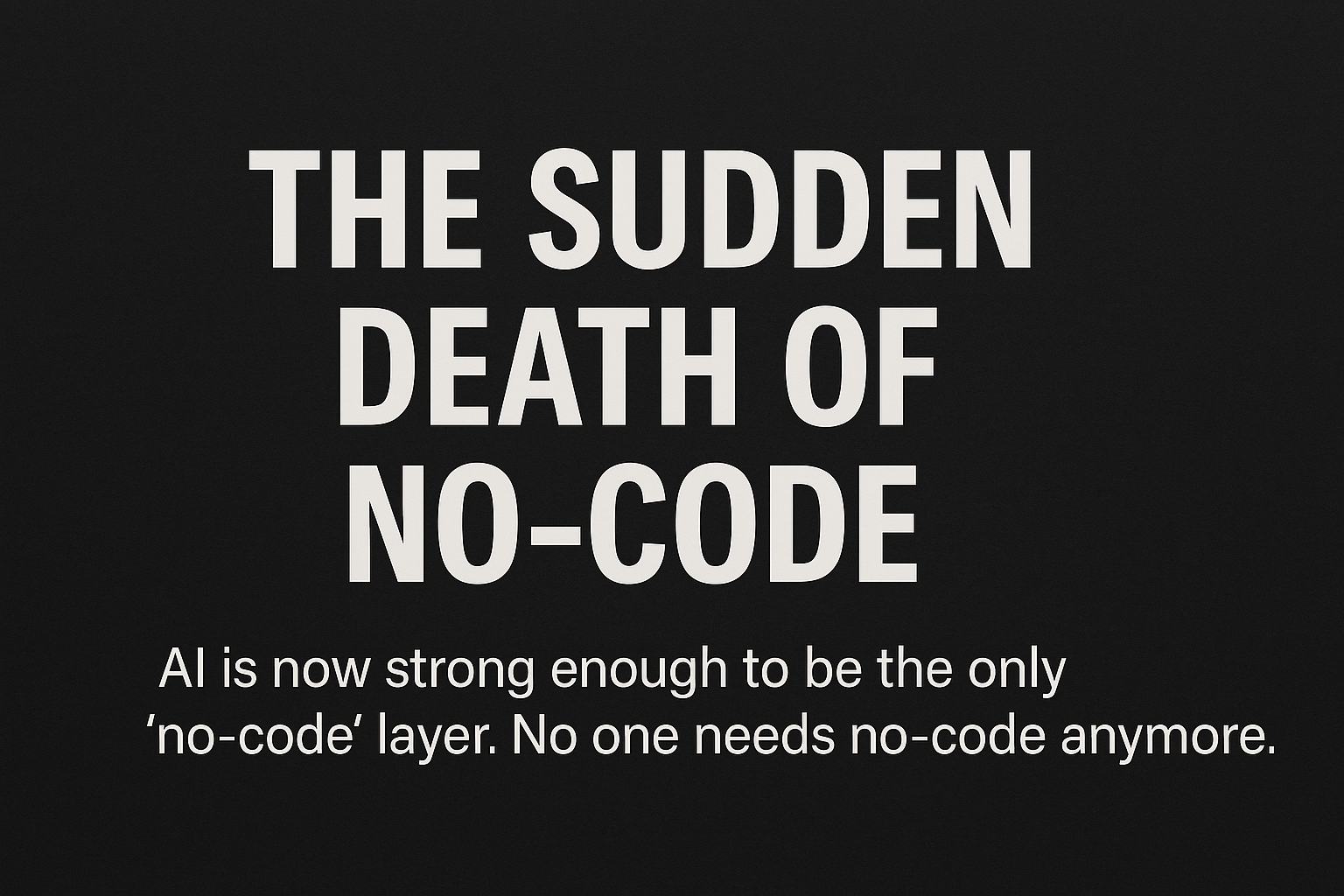
The world of chess has always been a blend of strategic depth and technological advancement. With the rise of artificial intelligence and real-time web applications, I embarked on a journey to create a simple yet engaging chess app. The idea was straightforward: develop a web-based chess game using HTML, CSS, and JavaScript that provides live AI-generated commentary on the moves as they happen.
Read more
Beauty pageants are written into the public consciousness as a chaotic mixture of glamour, kindness and drama. Until, even that corporeal mixture, the sense of powder and sweat, and Chanel perfume disappear in the lines of binary code, as will be the case with the upcoming, first-of-a-kind pageant happening in Spring 2024: Miss AI. During a course of a lovely May evening, AI-generated models (sic!) will be judged by a panel of experts - two of whom are also AI-generated. The beauty queens are competing not only on beauty: their creators will also have to answer the beloved question of “How would you make the world a better place?”; then, they can win up to 13 thousand dollars.
Read more
FAANG is an acronym for Facebook, Apple, Amazon, Netflix, Google. Those "tech giants" have a complex recruitment process designed to select the best of the best. Around 3 million people applied to Google alone in 2020. Only 20,000 of them were hired, which gives us a 0,67% acceptance rate!
Read more
Recently I have been working on the project that involves Azure Iot Edge technology. It is based on the notion of ‘modules’ which run code created by Microsoft, other people or your own code. Each module is being run in a docker container and there are 2 system modules that are responsible for orchestrating the whole IoT Edge System and inter-module/cloud communication.
Read more
2 years ago I discovered how easy it is to write your own Roslyn analyzer. It was presented to me during a meeting lead by Jiří Činčura at .Net Developer Days conference.
Read more
GraphQL is a popular API query language that offers more structured, performant and secure ways of accessing data from other services than REST. It requires the server to define a schema that lists all types of data available for clients of the API.
Read more